
Gauge for knitting: How to get the right fit
The gauge sample is an important step before starting any large knitting project to ensure that the end result and fit correspond to the desired measurements. In this guide, you will learn how to make a gauge sample, what it means, and what to do if the sample does not match the instructions.

What is a gauge swatch?
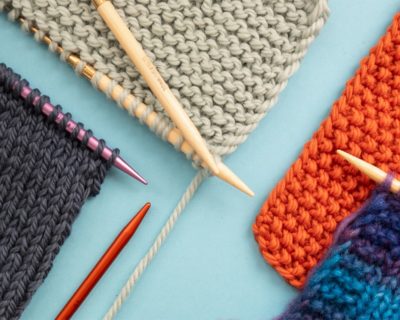
A gauge swatch is a small knitted section used to determine the density and size of the stitches with your own needle size and your own knitting pattern. It is typically about 20 x 20 cm in size, with the inner part, more precisely a 10 x 10 cm square, used for counting the stitches and rows.
You knit the gauge swatch in the main pattern of the chosen instructions with the needle size specified for the project and then measure how many stitches and rows there are in 10 cm.
Why is a gauge swatch important?
A gauge swatch shows how you personally knit – whether your stitches turn out tighter or looser. The aim is for your own gauge swatch to match the information in the knitting pattern. If it does not, the finished piece will differ in size and shape from the specifications. The project may turn out smaller or larger than planned, and the amount of yarn used may also not match the pattern.
- Knitting too tightly results in a size that is too small
- knitting too loosely makes the project too big
Knitting a gauge swatch:
Step by step
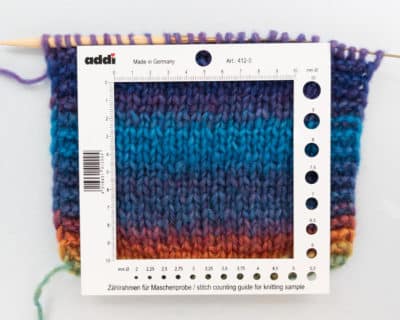
Preparing the gauge swatch
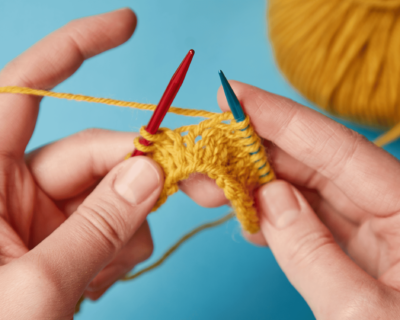
To knit a gauge swatch, knit a section of about 20 x 20 cm. It is knitted in the main pattern of the project to get a realistic result.
The number of stitches to cast on is determined from the gauge given on the yarn.
Tip: The edges can be knitted in garter stitch. To do this, knit the first and last rows as well as a few stitches at the beginning and end of the piece in garter stitch so that the square does not curl.

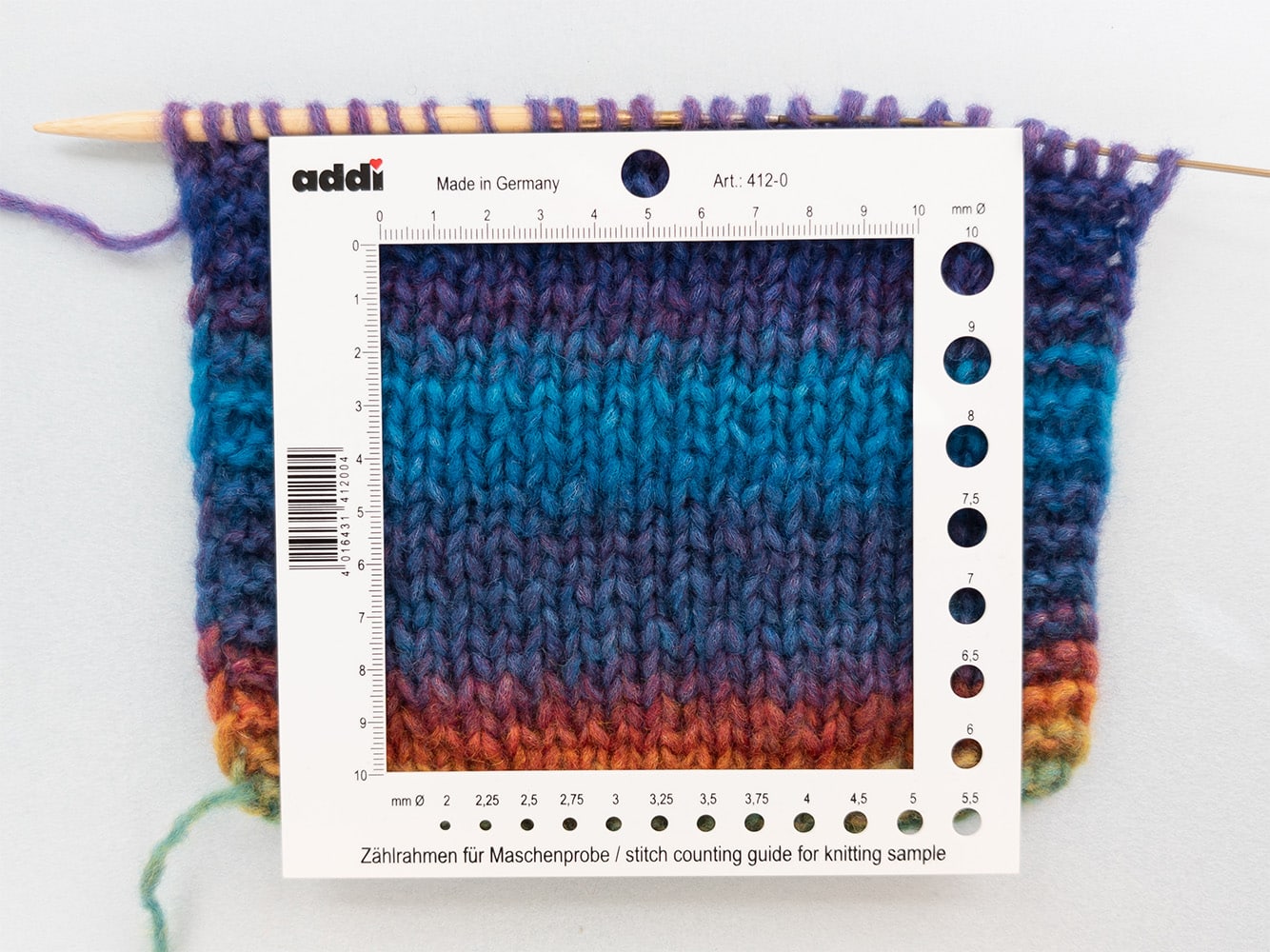

Counting stitches
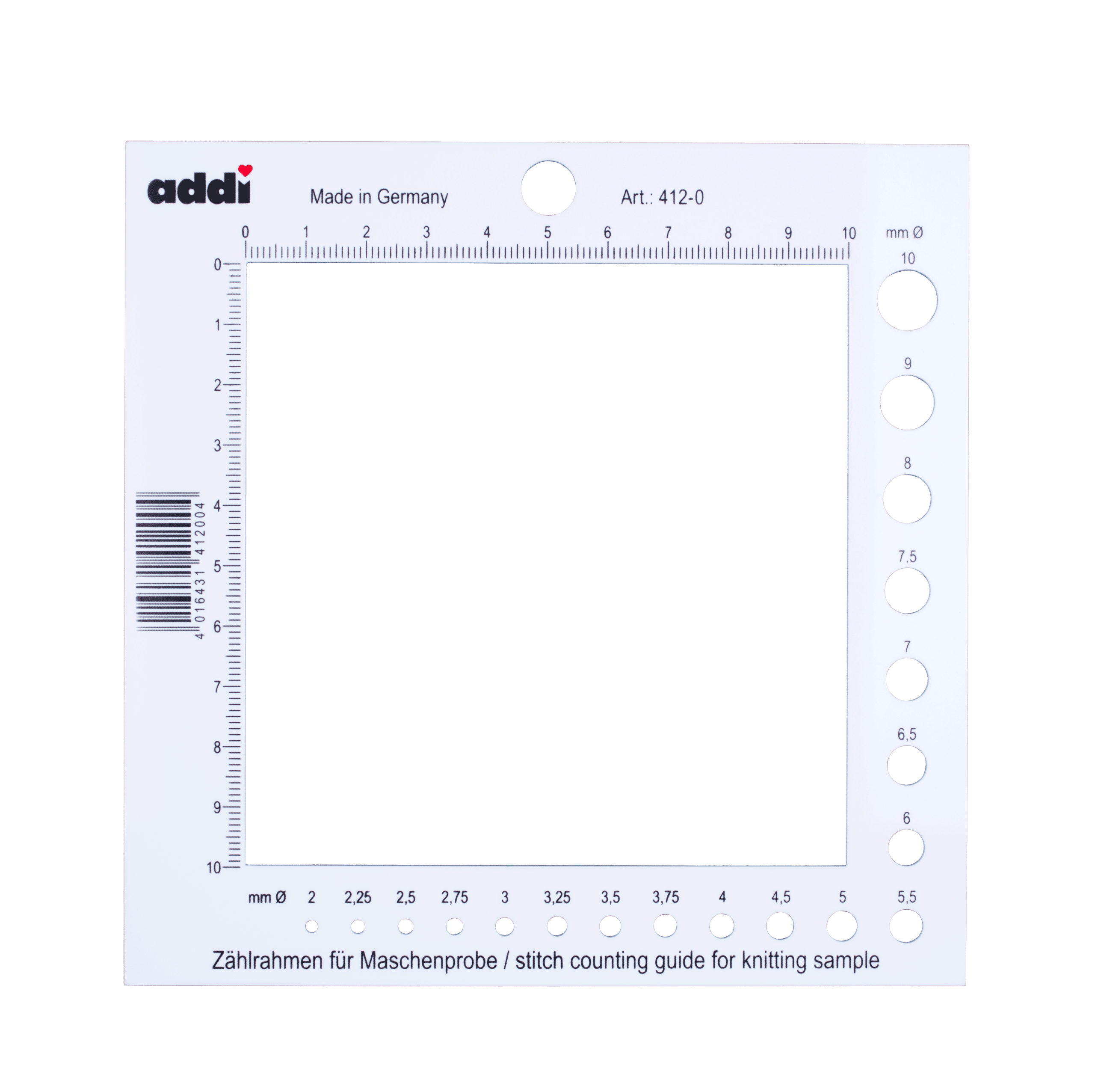
Once the gauge swatch has been knitted, it is measured. To count the stitches, a counting frame is placed on the patterned area. Within this area, the stitches and rows are counted over 10 cm.


Counting stitches
Once the gauge swatch has been knitted, it is measured. To count the stitches, a counting frame is placed on the patterned area. Within this area, the stitches and rows are counted over 10 cm.


Washing and measuring
The gauge swatch should then be washed to take into account any changes in the yarn caused by washing. After washing, measure again to make sure the knitted piece keeps the correct dimensions after washing. Some yarns stretch when washed, for example merino yarns, while others shrink, such as fine wool yarns.
If the gauge swatch is not right
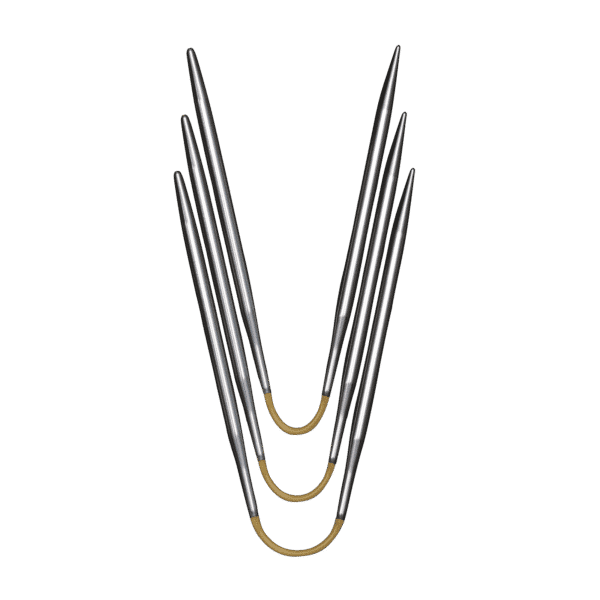
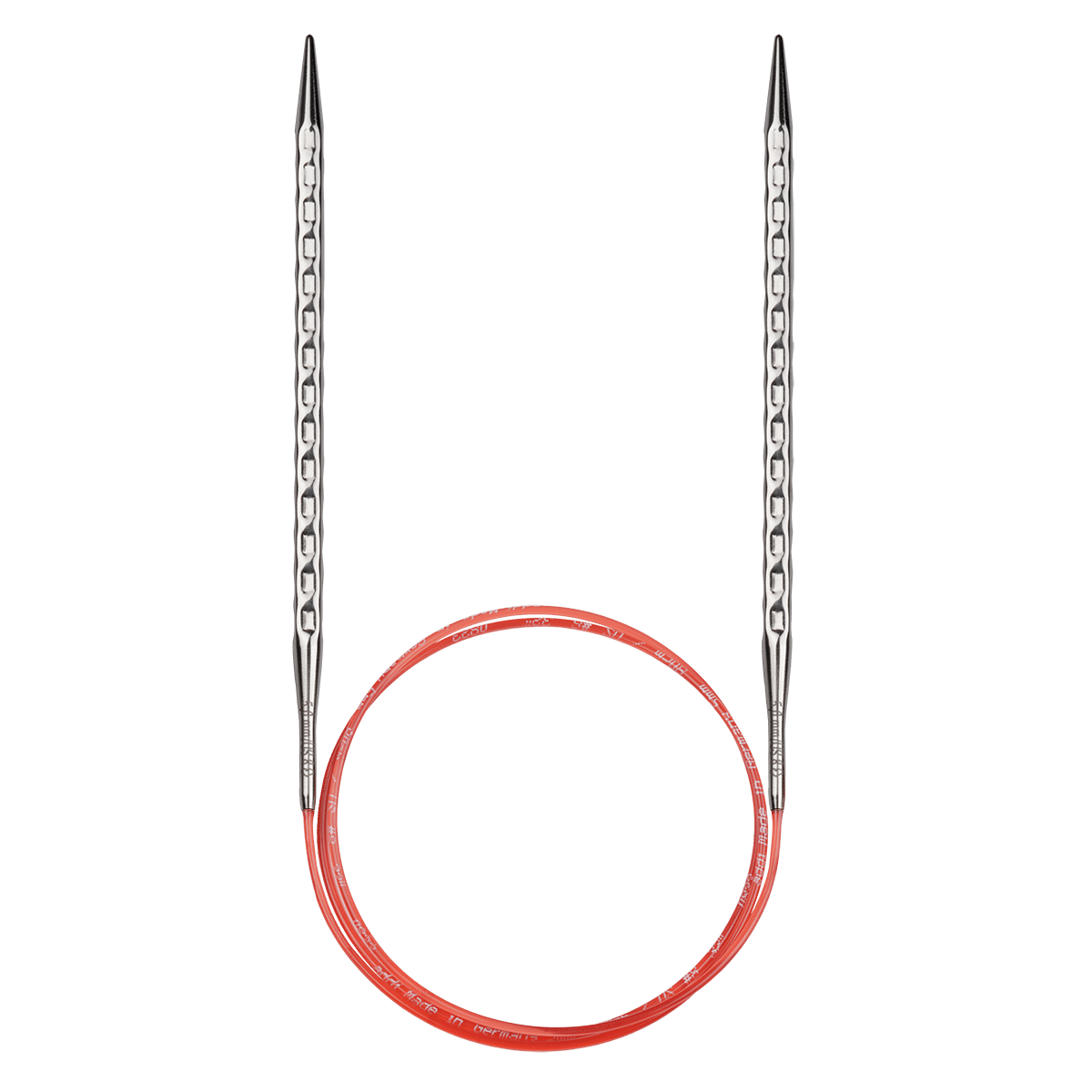
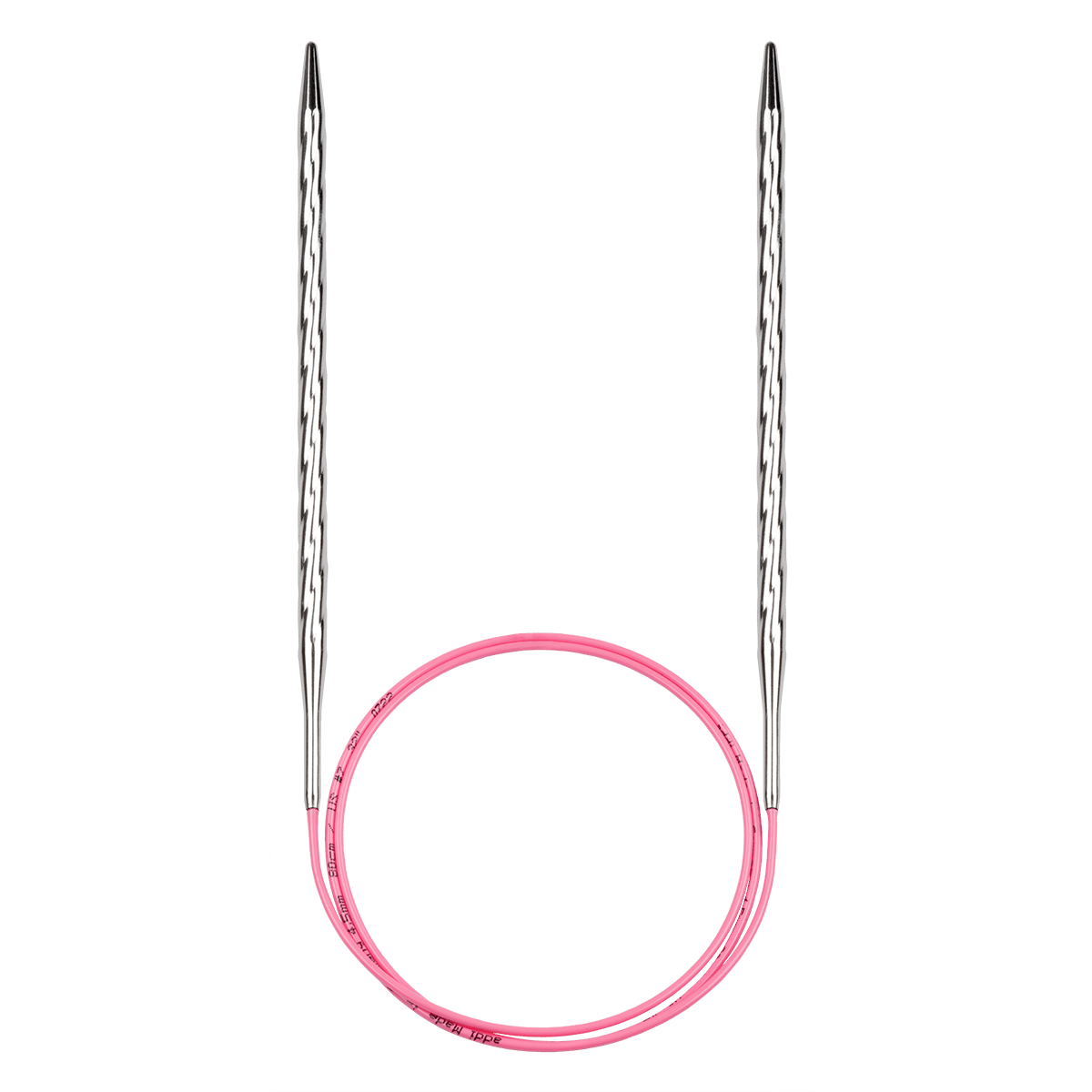
If the gauge swatch does not match the information in the pattern, this can easily be corrected by adjusting the needle size:
- Too many stitches: If you count too many stitches or rows, you may be knitting too tightly. A larger needle size can help loosen the gauge.
- Too few stitches: If there are too few stitches or rows, use a smaller needle size to increase the density of the stitches.
After adjusting the needle size, it is a good idea to make a new gauge swatch and wash it as well to make sure it matches the pattern specifications.
Gauge: yarn label vs. pattern
Tip: Gauge information is given both on the yarn label and in the knitting pattern, but in different contexts:
- Yarn label: The gauge on the yarn label refers to stitches knitted in stockinette stitch.
- Tutorial: In the pattern, the gauge refers to the main pattern of the project.
It is important to knit the gauge swatch in the pattern that is also used in the project. For example, for a piece knitted in garter stitch, the gauge swatch is made in that pattern.
Converting gauge with the addi2go handicraft app
The handicraft app addi2go offers a simple way to convert gauge quickly and easily. The app has a “size calculator” and a “gauge converter” that help you adjust your gauge.
- Size calculator: To calculate the right number of stitches for the knitting project, enter the information on the “gauge from the pattern”. Then enter the desired dimensions of the project in either centimetres or inches. The app then calculates the stitches and rows needed for the project.
- Gauge converter: If your own gauge differs from the pattern, this can be corrected with the converter. First, enter both the gauge from the pattern and your own, different gauge. Then, in step 2, open the “Gauge converter” tab to adjust the calculations to your actual gauge.
The app is a useful aid for planning knitting projects precisely and calculating the number of stitches correctly. You can find more information here: addi2go.

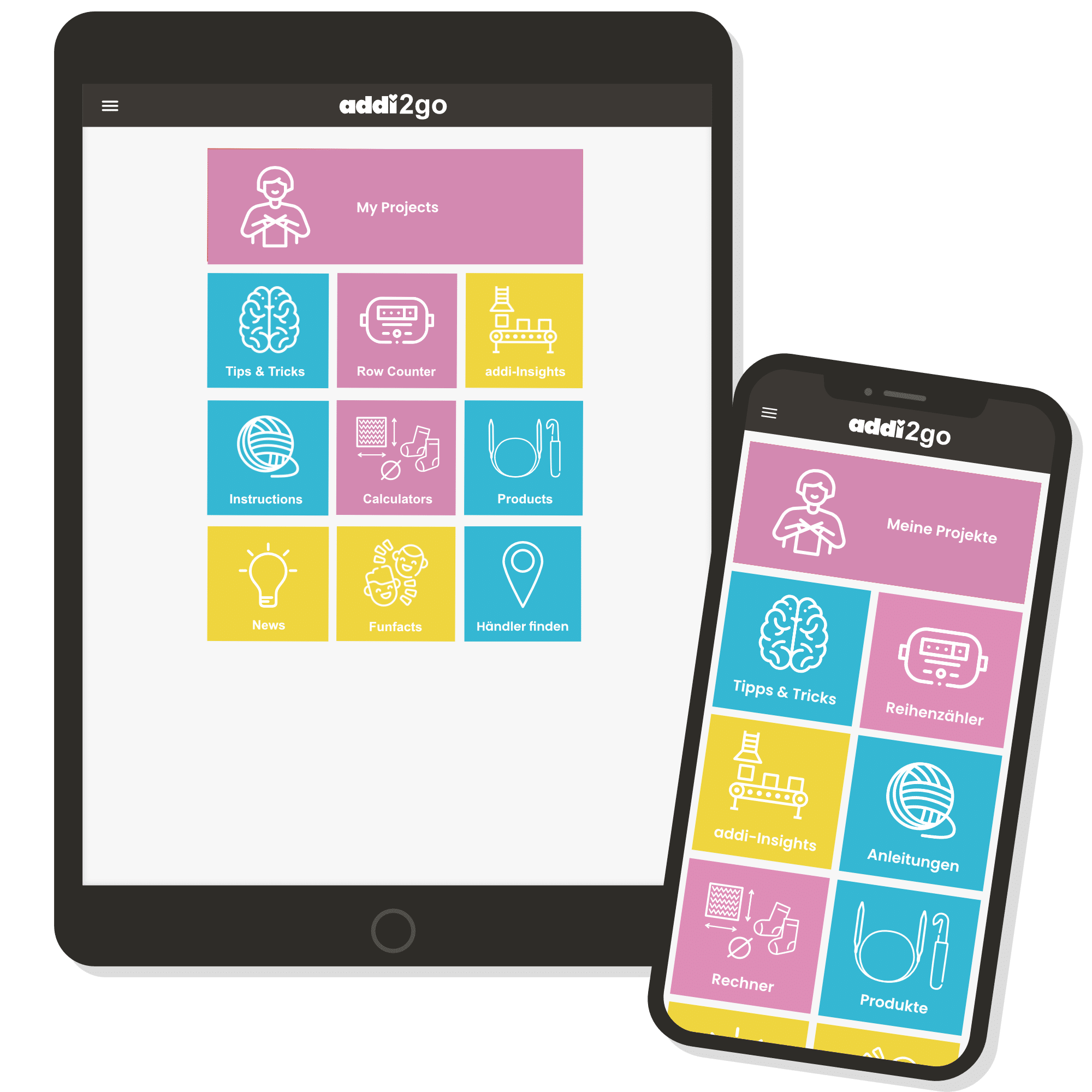
Converting gauge with the addi2go handicraft app
The handicraft app addi2go offers a simple way to convert gauge quickly and easily. The app has a “size calculator” and a “gauge converter” that help you adjust your gauge.
- Size calculator: To calculate the right number of stitches for the knitting project, enter the information on the “gauge from the pattern”. Then enter the desired dimensions of the project in either centimetres or inches. The app then calculates the stitches and rows needed for the project.
- Gauge converter: If your own gauge differs from the pattern, this can be corrected with the converter. First, enter both the gauge from the pattern and your own, different gauge. Then, in step 2, open the “Gauge converter” tab to adjust the calculations to your actual gauge.
The app is a useful aid for planning knitting projects precisely and calculating the number of stitches correctly. You can find more information here: addi2go.


Tip for beginners – keep your gauge swatches
It can be useful to collect your gauge swatches and keep them for later projects. Over time, these swatches may be turned into a creative and versatile patchwork blanket. Alternatively, you can unravel the gauge swatch and use the yarn for another handicraft project.
Tip: In the addi2go app, you can create a project for each pattern. Every gauge calculator in the project is saved.
FAQ: Frequently asked questions about gauge swatches
What should I do if my gauge is not right?
If the gauge does not match the specifications, adjust the needle size.
- If there are too many stitches or rows, use a larger needle.
- If there are too few stitches or rows, choose a smaller needle size.
What does “stockinette stitch” mean for a gauge swatch?
Stockinette stitch means that the knitted fabric shows only knit stitches on one side and only purl stitches on the other side. It is a common pattern that is often used as the basis for gauge swatches.
- When working in rows, alternate one knit row and one purl row.
- When working in rounds, only knit stitches are worked.
How do you convert a gauge?
A gauge can be converted using a simple rule of three:
(Width in cm x number of stitches over 10 cm) / 10 = number of stitches needed.
You can find a stitch calculator in our handicraft app addi2go.
Should you always make a gauge swatch?
It is advisable to make a gauge swatch before every new knitting project where fit matters, such as garments, especially with new yarns or patterns. A gauge swatch can also be helpful after longer breaks from knitting to check your own knitting technique.