

From Vancouver to Cologne: The Birth of the YarnArm
Knitting and crocheting can be a bit of a challenge when you’re out and about. Wouldn’t it be brilliant to solve the problem of yarn rolling around, getting tangled in your bag, and being difficult to carry with a handy tool?
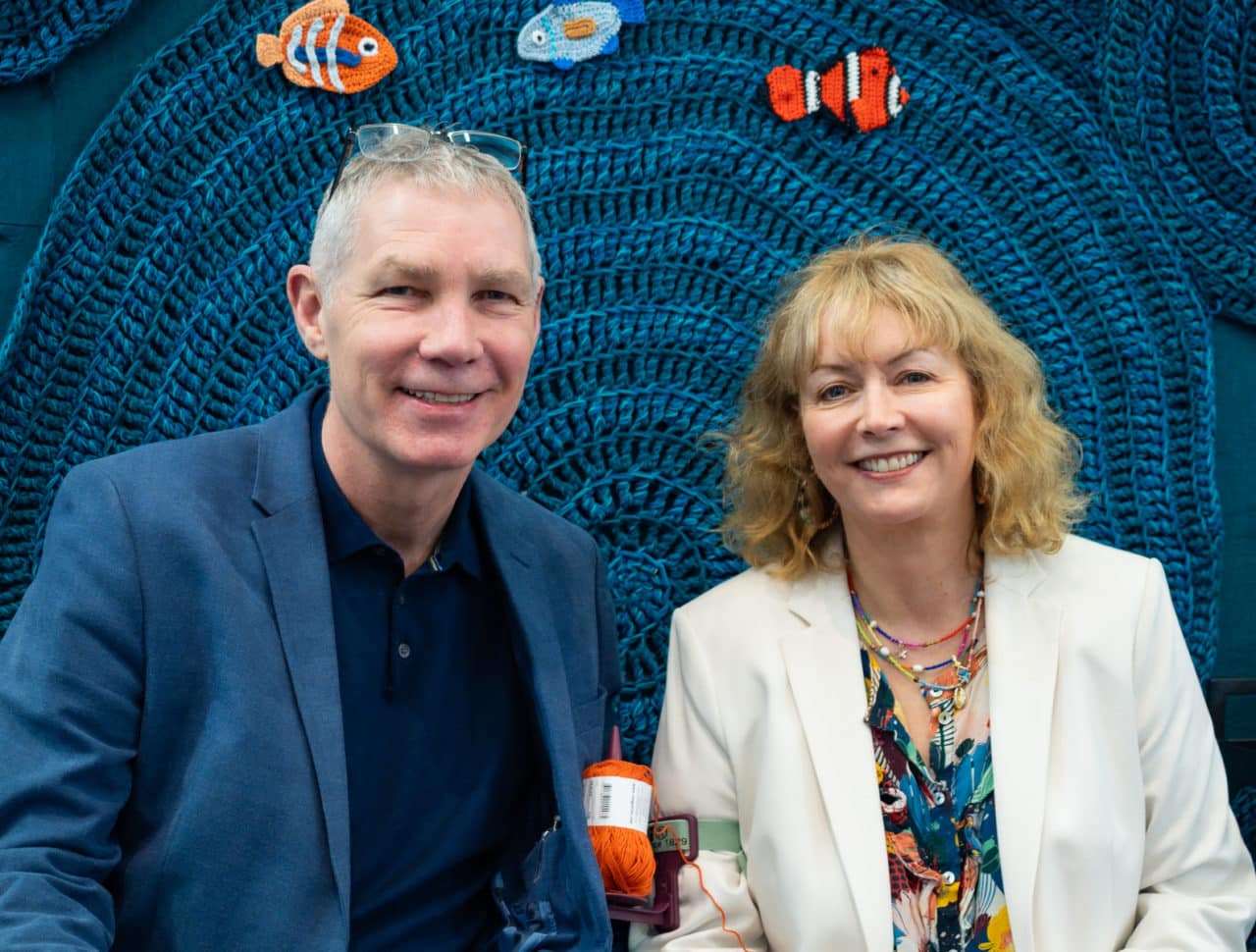
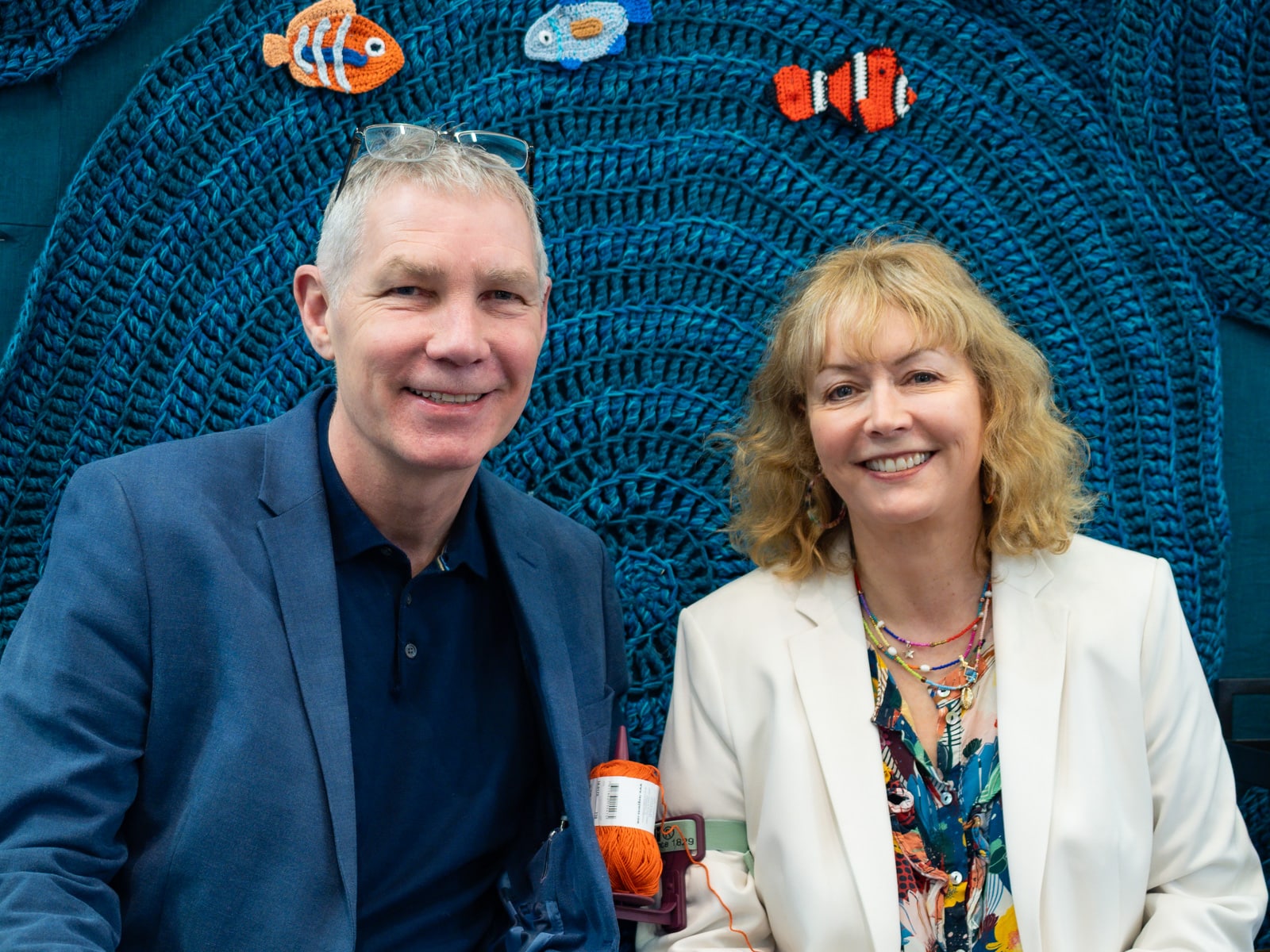
Here you can find out how the YarnArm 2024 was invented by British couple Adrian and Louise Grieves.
A Tangled Beginning
Every invention has an origin story and this one starts on holiday, on a bus on Vancouver Island in July 2024.
I was crocheting, repeatedly rescuing my ball of wool from the grubby bus floor as it rolled off my lap yet again. Watching this, my husband Ade made a throwaway comment that changed the course of our focus for the entire next year: “What you need is something to anchor the wool to your arm.”
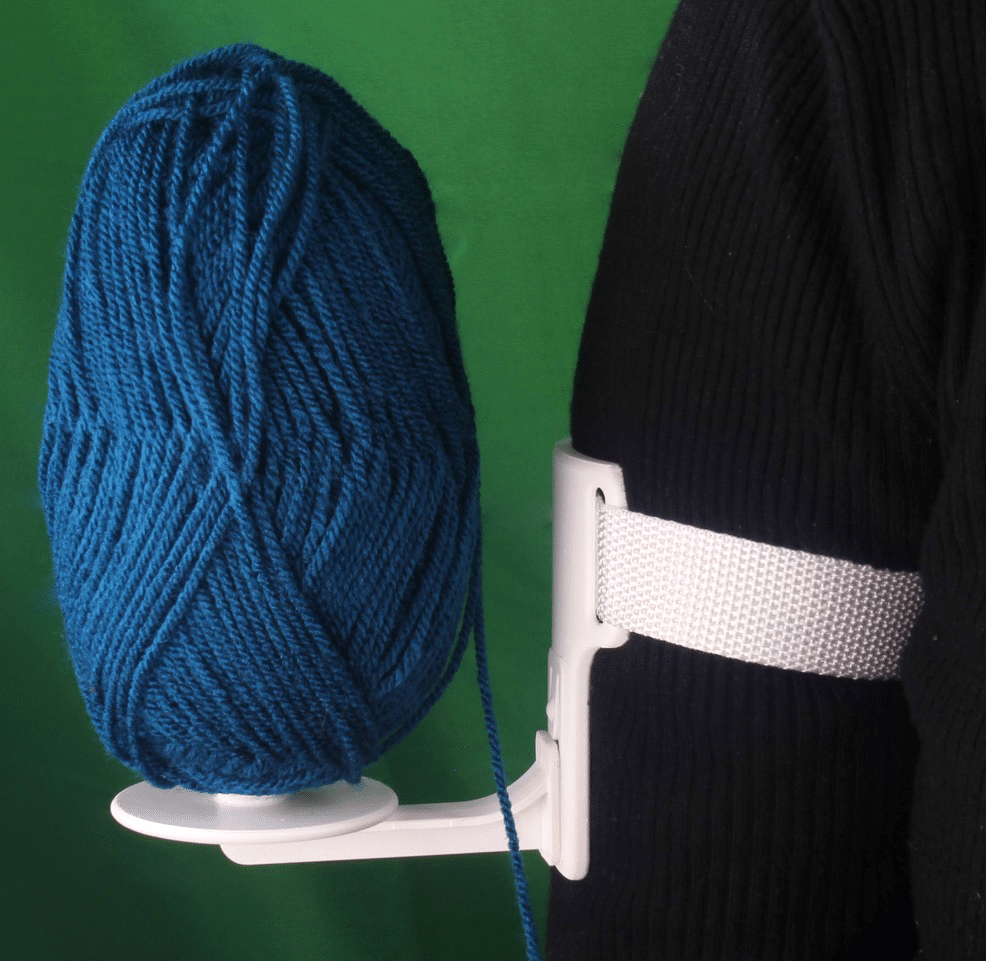
We immediately started discussing ideas: perhaps a lightweight yarn bowl or spindle attached to the upper arm to hold the wool in place?
Surely someone must have invented this already. A quick Google search suggested otherwise. The YarnArm (spoiler alert: now the addiYarnArm) was born.

Prototypes and Possibility
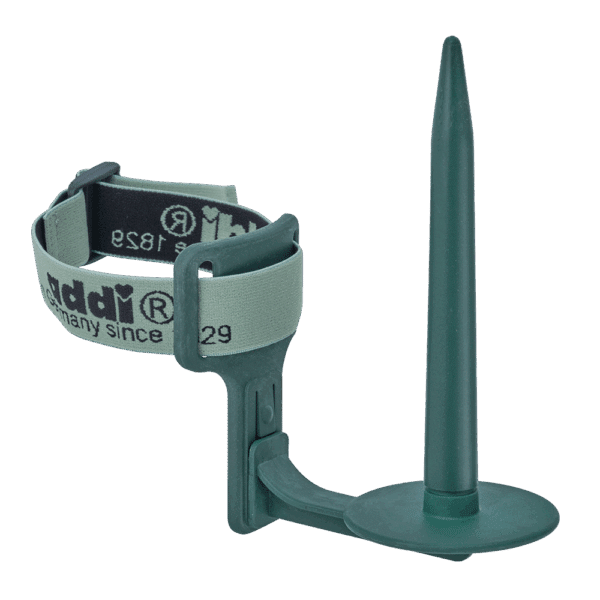
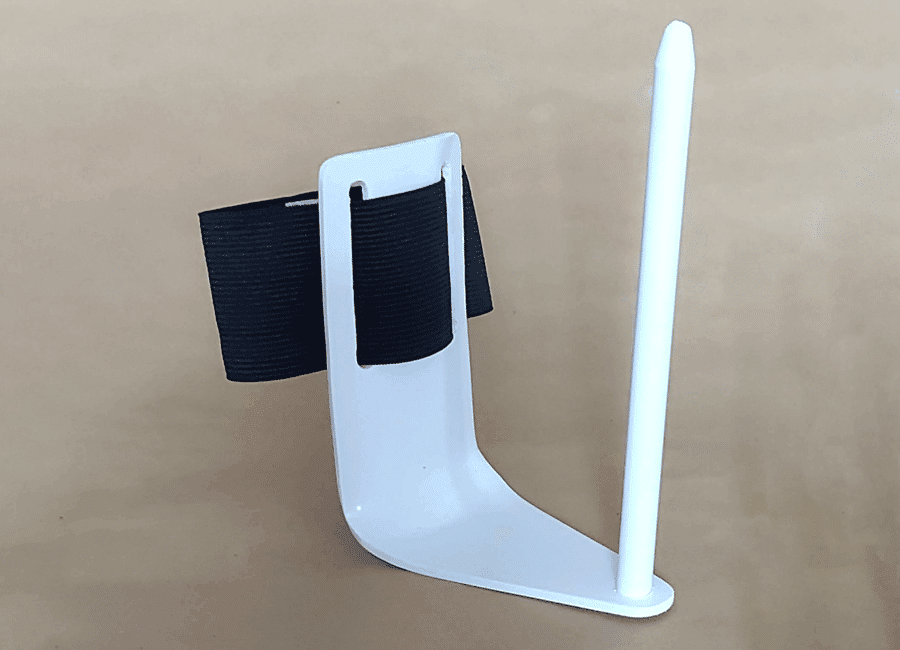
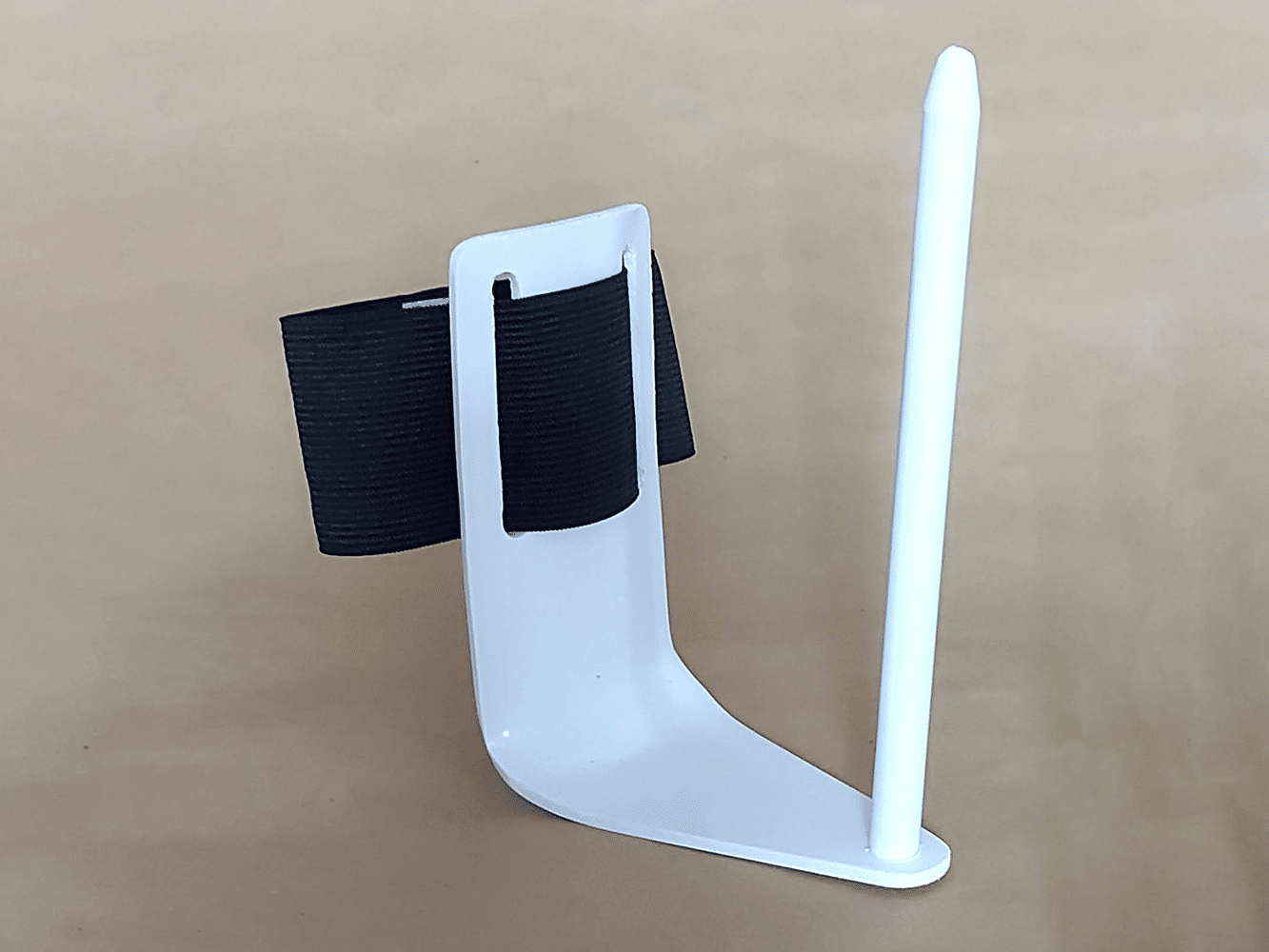
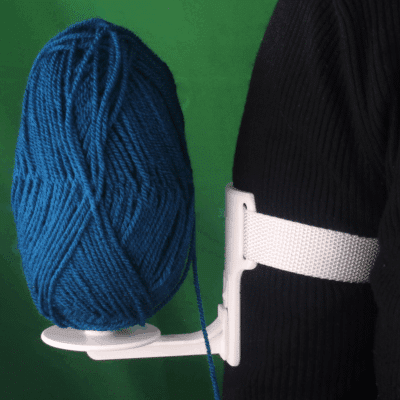
Back home, Ade got straight to work. The first version — involving a small plastic bowl — was mercifully brief and not terribly successful. The second version was the breakthrough: a curved plastic bracket with a smooth-running spool and elastic strap. It worked beautifully. The yarn fed cleanly, didn’t snag, and crucially, didn’t jump ship.
We knew instantly this wasn’t just a personal fix, it was a product. We applied for a provisional patent and trademarked the name YarnArm. The question became: what next?
Prototypes and Possibility
Back home, Ade got straight to work. The first version — involving a small plastic bowl — was mercifully brief and not terribly successful. The second version was the breakthrough: a curved plastic bracket with a smooth-running spool and elastic strap. It worked beautifully. The yarn fed cleanly, didn’t snag, and crucially, didn’t jump ship.
We knew instantly this wasn’t just a personal fix, it was a product. We applied for a provisional patent and trademarked the name YarnArm. The question became: what next?


Licensing, Not Dragons
Despite many cries of “You should go on Dragon’s Den!”, we knew that route wasn’t for us. Building a manufacturing business from scratch in our late fifties sounded exhausting, expensive and risky. Licensing the idea to an established craft brand made far more sense.
Ade created a sell sheet with photos of me using the YarnArm on trains. We contacted major knitting and crochet companies — and heard nothing. Emails vanished into the void. LinkedIn messages were ignored. Even Facebook approaches got us nowhere.
Proof from the Public
Everything changed in September at a large knitting and crochet show at Newbury Racecourse. I wore the YarnArm as we walked around, and the reaction was immediate and enthusiastic. People stopped, nudged friends and asked us the same question again and again: “Where can I get one?”
Others told us they’d needed this exact thing while commuting, knitting on sofas, or crafting in wheelchairs. The market demand suddenly felt very real — and very vocal.
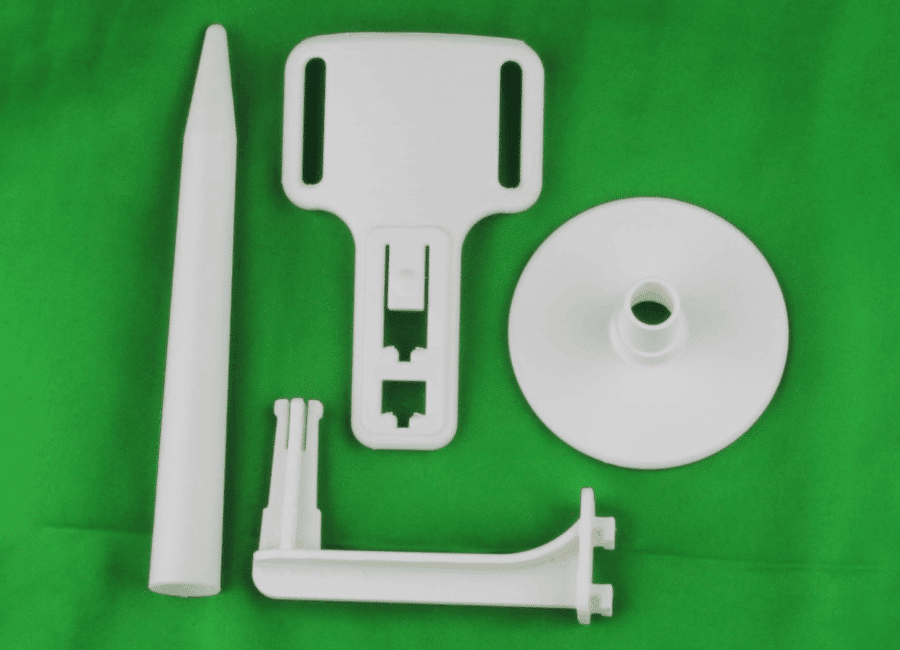
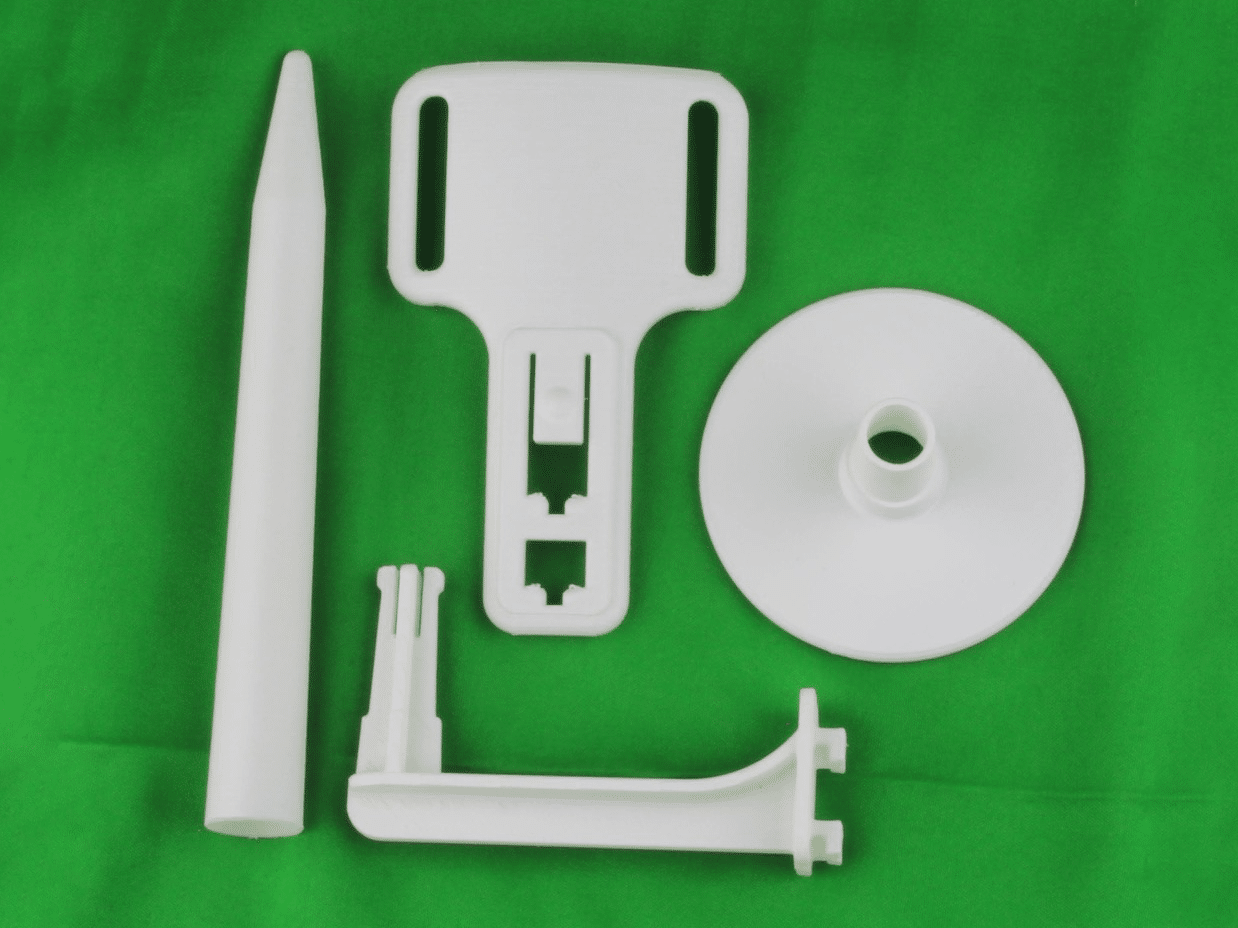
Buoyed by this response Ade redesigned the YarnArm, having researched the requirements for injection-mould design, to make it cheaper and easier to mass-produce. The new version packed flat and assembled very quickly and easily. When a friend offered a high-quality 3D printer, Ade drove nine hours round-trip to collect it. The resulting prototype now looked like a production-ready commercial product.
Proof from the Public
Everything changed in September at a large knitting and crochet show at Newbury Racecourse. I wore the YarnArm as we walked around, and the reaction was immediate and enthusiastic. People stopped, nudged friends and asked us the same question again and again: “Where can I get one?”
Others told us they’d needed this exact thing while commuting, knitting on sofas, or crafting in wheelchairs. The market demand suddenly felt very real — and very vocal.
Buoyed by this response Ade redesigned the YarnArm, having researched the requirements for injection-mould design, to make it cheaper and easier to mass-produce. The new version packed flat and assembled very quickly and easily. When a friend offered a high-quality 3D printer, Ade drove nine hours round-trip to collect it. The resulting prototype now looked like a production-ready commercial product.
An idea at h+h 2025
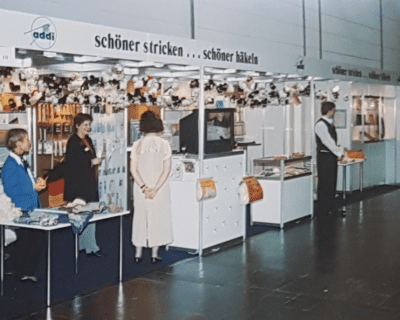
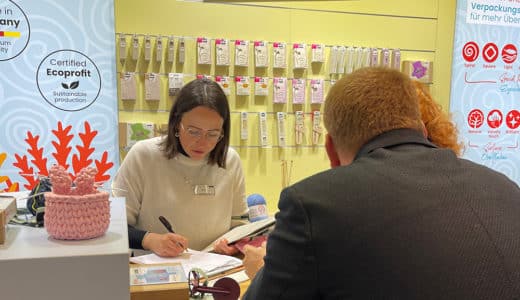
We finally had some success in talking directly to UK distributors. The MD of Habico in Leeds, the wonderful Rachal Boxall, gave us advice that led to introductions abroad, and by late 2024 we were in talks with a Taiwanese manufacturer, Micky. At this stage we thought we were going to have to venture it ourselves so we were making preparations for organising manufacturing and sales/distribution. Micky made a mould, produced a small number of samples and invited us to the huge h+h craft trade show in Cologne in March 2025.
Feedback from retailers, distributors, and even airline cabin crew on the flight over was gratifyingly positive. People snapped photos. Manufacturers asked questions. The YarnArm was no longer just an idea — it was a product that several large manufacturers at the show were very keen on.
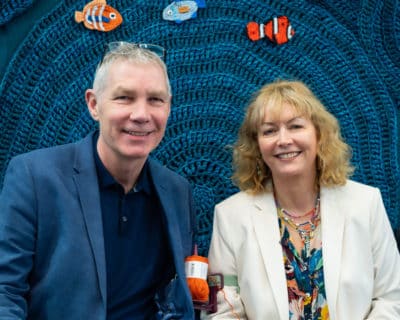
Among these was Addi – with whom we were delighted to agree a licensing deal in May 2025.
The Simple Joy of a Good Idea
Looking back, it still feels slightly surreal that something which began as my wool rolling away on a bus turned into a real product in under ten months. Neither of us set out to become inventors; we were just trying to make crafting a bit less annoying.
But once we saw how instantly useful the YarnArm is — and how strongly other knitters and crocheters reacted to it — we couldn’t let it go.
It’s been a mixture of curiosity, stubbornness, excitement and luck, and a reminder that sometimes the best ideas grow out of everyday life and the confidence to think, “Actually… this might be something.”
This year we will be returning to h+h, this time as Addi’s guests, to launch and demonstrate the official addiYarnArm. We can’t wait!
Presentation of the addiYarnArm at h+h cologne 2026
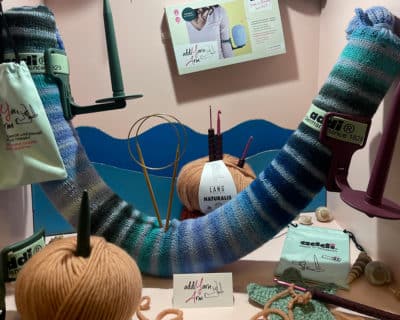
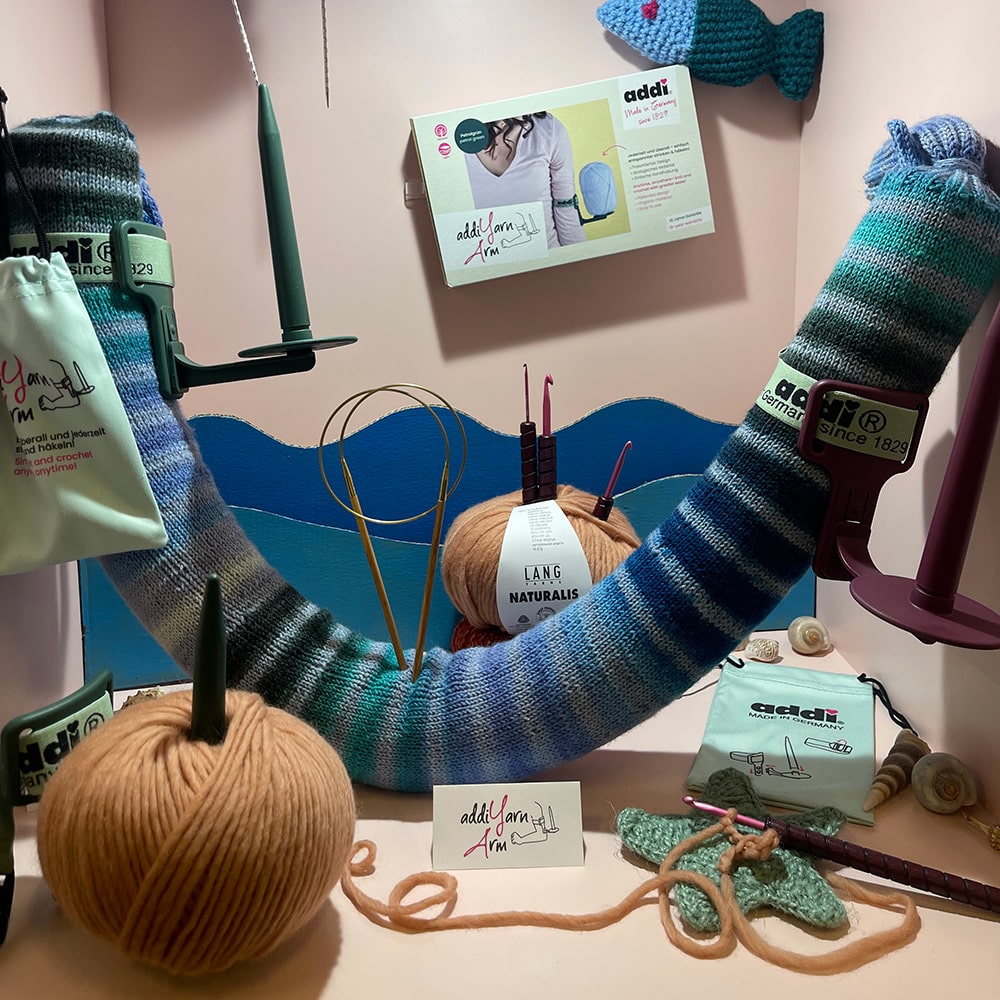
By March 2026, the time had finally come. Following constant consultation with addi on the product’s development, the addiYarnArm was now complete!
- made from a bio-based plastic derived from sunflower seed husks
- Made in Germany:
- in two colours
- packaged in a handy cardboard box
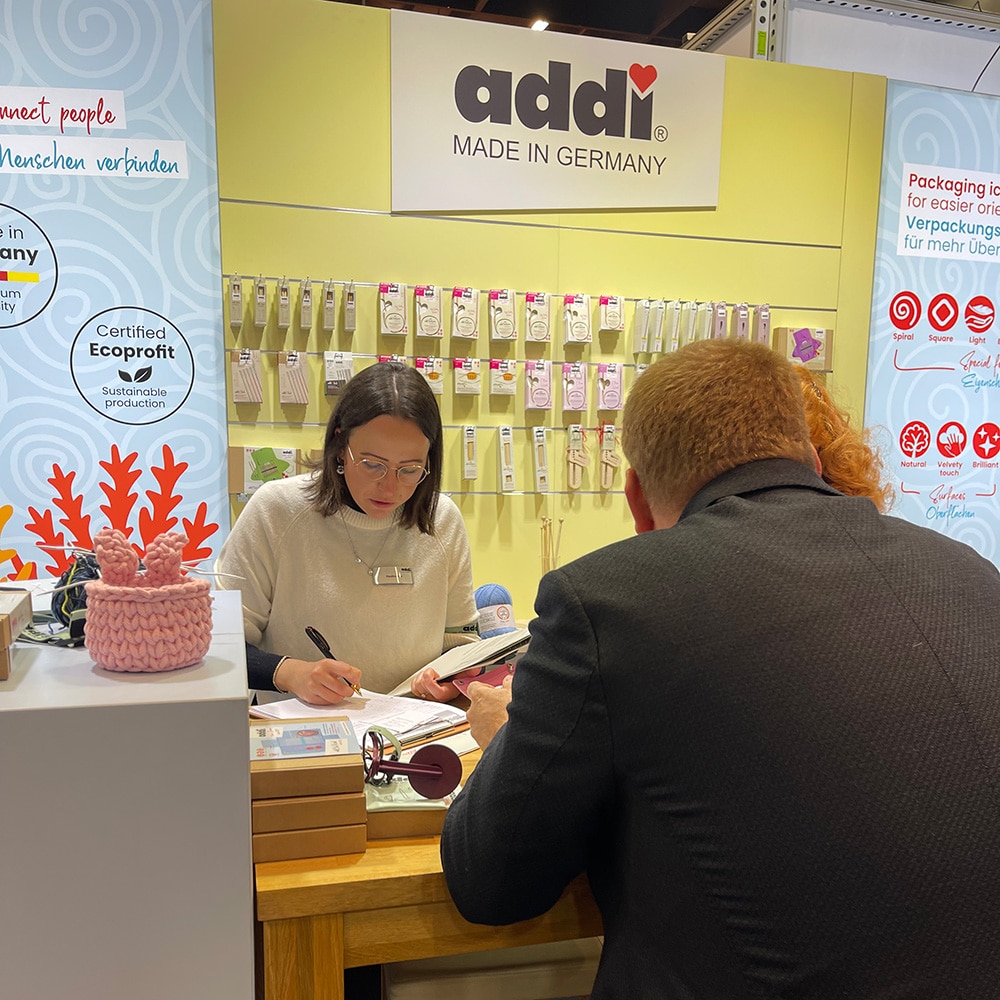
We were there in person at h+h to showcase the product, and many retailers showed great interest.
Presentation of the addiYarnArm at h+h cologne 2026
By March 2026, the time had finally come. Following constant consultation with addi on the product’s development, the addiYarnArm was now complete!
- made from a bio-based plastic derived from sunflower seed husks
- Made in Germany:
- in two colours
- packaged in a handy cardboard box
We were there in person at h+h to showcase the product, and many retailers showed great interest.



Mit dem Laden des Videos akzeptieren Sie die Datenschutzerklärung von YouTube.
Learn more