
Tutorial: Knit stitches for beginners
Knitting knit stitches is one of the basic skills and is considered one of the simplest techniques. It doesn't matter whether you use circular needles, double-pointed needles or two single needles – the only important thing is that the needle size matches the yarn. We show you how to knit knit stitches easily.

What are knit stitches?
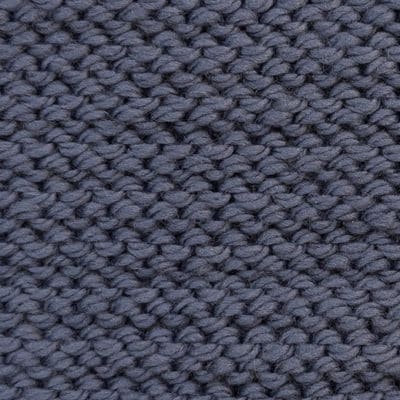
The combination of knit and purl stitches forms the basis of every knitted piece. A knitted stitch appears as a purl stitch on the back. A purled stitch appears as a knit stitch on the back. On the front, knit stitches look like small “v” shapes. If you turn the knitted piece over, you can see a row of small bumps. Does that sound difficult at first? Don't worry – it's easier than it seems.

What are knit stitches?
The combination of knit and purl stitches forms the basis of every knitted piece. A knitted stitch appears as a purl stitch on the back. A purled stitch appears as a knit stitch on the back. On the front, knit stitches look like small “v” shapes. If you turn the knitted piece over, you can see a row of small bumps. Does that sound difficult at first? Don't worry – it's easier than it seems.
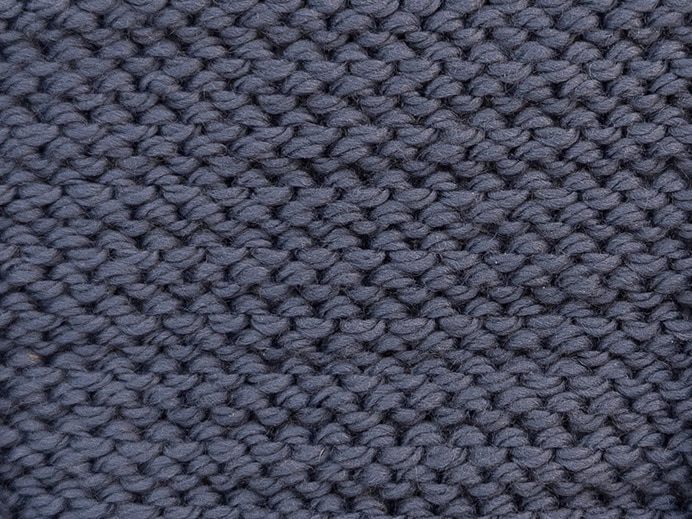
Knitting knit stitches:
Step-by-step tutorial
Preparation and hand position
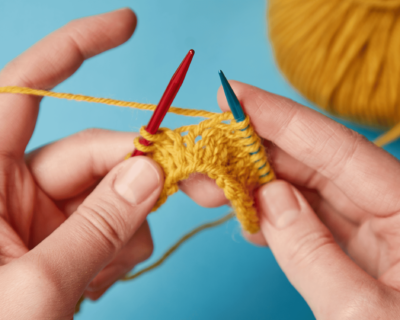
The cast-on stitches are now on the needle in the left hand. The yarn leading to the ball should be at the beginning of the needle. The yarn is now wrapped around the index finger and held in place with the remaining fingers of the left hand, which also hold the left knitting needle.
Tip: Everyone holds the yarn slightly differently, and how often it is wrapped around the index finger is something each person has to find out for themselves to get good yarn tension.
By loading the video you accept the privacy policy of YouTube.
Learn more
Inserting into the stitch
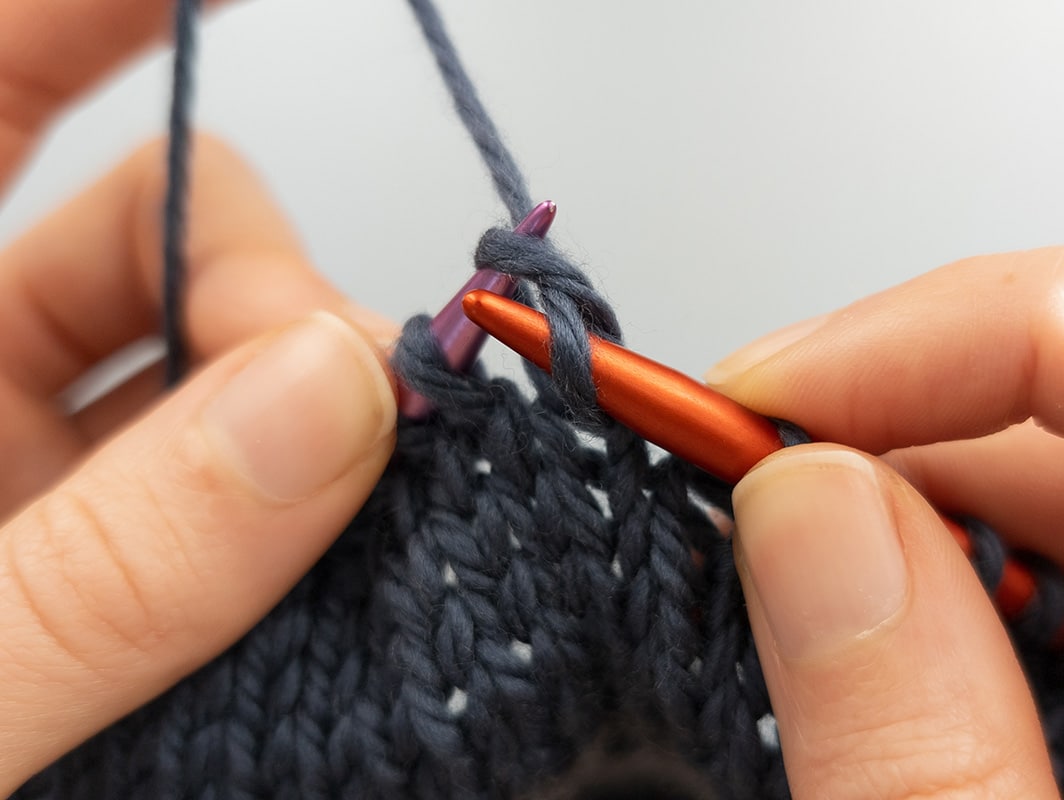
- Insert the right-hand needle front to back into the first stitch of the left-hand needle, traversing the stitch and passing behind the left-hand needle. - The right-hand needle should lie comfortably on your hand.

Inserting into the stitch
- Insert the right-hand needle front to back into the first stitch of the left-hand needle, traversing the stitch and passing behind the left-hand needle. - The right-hand needle should lie comfortably on your hand.

Picking up the yarn
- Wrap the working yarn lying over your left forefinger around the right-hand needle back to front. - Then pull it through the stitch, forming a new stitch on the right needle.

Picking up the yarn
- Wrap the working yarn lying over your left forefinger around the right-hand needle back to front. - Then pull it through the stitch, forming a new stitch on the right needle.


Slip the stitch off
- After pulling the yarn through the stitch, let it slip from the left-hand needle. - The new stitch remains on the right needle. - Repeat this until you have knitted all stitches from the left-hand needle.
As soon as all knit stitches have been knitted from the left to the right needle, you can look at the first row of knit stitches directly after the cast-on. It shows the typical pattern of knit stitches, which is reminiscent of small hearts or the letter “V”. On the back, you can see the small bumps

What do you need knit stitches for?
The knit stitch has its counterpart in the purl stitch. Once you have mastered both types of stitch, many possibilities open up for creating different knitting patterns. Numerous patterns and knitted pieces can already be made by combining knit and purl stitches in different ways.
You can knit the following patterns with knit stitches:
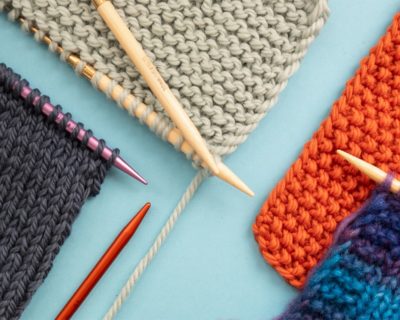
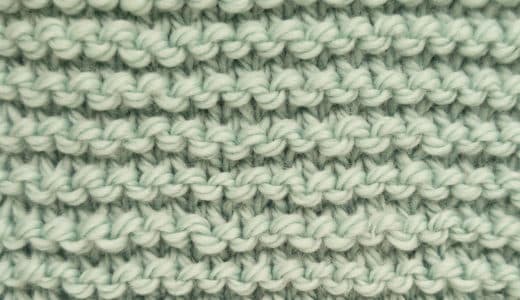
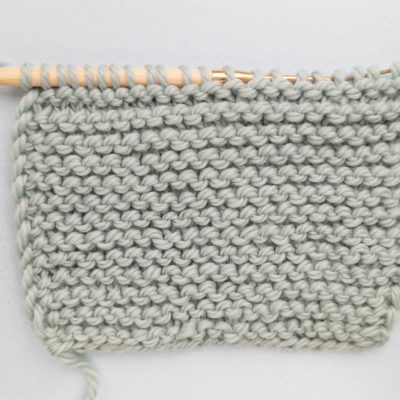
- Garter stitch: Here, only knit stitches are knitted in every row, which results in an even, wavy pattern that does not curl (particularly easy for beginners to practise knit stitches).
- Stockinette stitch in rounds: This classic pattern is created by knitting knit stitches in the round. This creates a smooth front with small “v”-shaped stitches and a textured back of purl stitches on the inside.
In combination with purl stitches, many more knitting patterns are possible:
- Rib pattern: Alternating 1 knit and 1 purl stitch over several rows creates the rib pattern. It provides elasticity and is often used for ribbing because it contracts slightly.
- Seed stitch: This is created by knitting knit and purl stitches offset (ideally with an odd number of stitches). A knit stitch is followed by a purl stitch and vice versa.
In addition to these patterns, further designs can be created through variations, such as the Checkerboard pattern, in which blocks of knit and purl stitches create a check pattern, or wider rib patterns.
Some patterns are described in our “Simple sock patterns”.



FAQ: Frequently asked questions about knit stitches
What does a knit stitch look like?
Knit stitches have the shape of a small “v” on the front. On the back, they appear as small bumps.
What is the difference between knit and purl stitches?
Knit stitches are created when the yarn is held behind the needle, while purl stitches are knitted with the yarn in front of the needle.
Why do the stitches sometimes slide with difficulty when knitting?
Difficulties with sliding stitches can occur
- if the stitches are knitted too tightly. Try to hold the yarn more loosely when knitting.
- if the material of the knitting needle does not suit the yarn (e.g. bamboo with acrylic yarn). Use a smooth metal needle instead.
Can you make a complete knitted piece with knit stitches only?
Yes, by knitting garter stitch (for flat pieces) or stockinette stitch (knitted in the round), a knitted piece can consist entirely of knit stitches. These patterns are particularly suitable for scarves, blankets and simple projects.
How do you switch between knit and purl stitches?
To switch from a knit to a purl stitch, the working yarn is placed in front of the needle. To switch back to the knit stitch, the yarn is taken to the back of the work.
What happens if you accidentally knit a purl stitch instead of a knit stitch?
The knitted piece will show a different texture at that point. This mistake can be corrected (unravel one row or knit it back up the other way with a crochet hook) or left as part of the design, depending on preference.